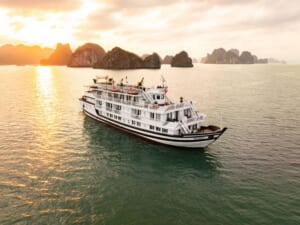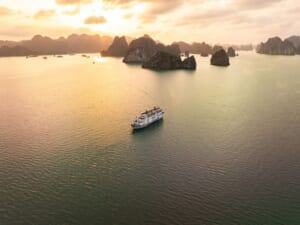
I was checking the weather radar at 4:47 AM when I heard the shutter click. A guest from Tokyo — Kenji, retired architect — had set up a tripod on the sundeck while everyone else slept. He was shooting the pre-dawn karsts in that pale blue light that lasts maybe twelve minutes before the sun breaks. By breakfast, he showed me the photos. They were better than anything I’ve seen in a tourism brochure, and I’ve seen thousands.
Photography on an overnight cruise in Halong Bay is about timing. Not camera specs, not filters, not editing software — timing. After 13 years on this bay and roughly 3,000 sailings across eight ships, I know exactly when the light does what. This guide gives you that knowledge without the 13-year apprenticeship.
At a glance:
- Best photography windows: 5:15–6:30 AM (sunrise) and 4:45–6:15 PM (golden hour)
- Top 3 spots on ship: sundeck stern, cabin balcony, tender boat
- Essential gear: smartphone with night mode OR mirrorless camera, polarizing filter
- The bay gives you ~22 hours of continuously changing light on an overnight cruise
- Cozy Bay Grand’s sundeck is open from 5:30 AM — arrive early for best position
The Light Calendar: Hour-by-Hour Photography on an Overnight Cruise in Halong Bay
Every photographer I meet asks the same question: “When should I shoot?” Here’s the hour-by-hour reality from someone who has watched the light change on this bay more than 3,000 times.
Day 1 Photography Timeline
| Time | Light Condition | Best Subject | Difficulty | Mike’s Rating |
|---|---|---|---|---|
| 11:30 AM | Harsh midday sun | Ship details, wide bay panorama | Easy | ★★★☆☆ |
| 12:00–1:00 PM | Overhead light, flat | Food photography at lunch | Easy | ★★★★☆ |
| 2:00–3:30 PM | Afternoon side-light | Cave interiors, Titov Island summit | Medium | ★★★★☆ |
| 4:00–5:00 PM | Pre-golden, warm tone | Karst silhouettes from sundeck | Easy | ★★★★☆ |
| 5:15–6:15 PM | Golden hour | Everything — this is THE window | Medium | ★★★★★ |
| 6:15–6:45 PM | Blue hour | Karst reflections, ship lights | Hard | ★★★★★ |
| 8:30–10:00 PM | Night sky, no moon | Stars, Milky Way (clear nights only) | Expert | ★★★★★ |
Day 2 Photography Timeline
| Time | Light Condition | Best Subject | Difficulty | Mike’s Rating |
|---|---|---|---|---|
| 5:00–5:30 AM | Pre-dawn blue | Mist on karsts — the rarest shot | Expert | ★★★★★ |
| 5:30–6:15 AM | Sunrise | Sun breaking through limestone gaps | Medium | ★★★★★ |
| 6:15–7:00 AM | Morning golden | Tai chi silhouettes, calm water reflections | Easy | ★★★★★ |
| 7:00–9:00 AM | Soft morning light | Breakfast scenes, ship details, departing panorama | Easy | ★★★★☆ |
My father says, “Vịnh đẹp nhất khi không ai nhìn” — the bay is most beautiful when nobody’s looking. He means early morning. He’s right. The pre-dawn window between 5:00 and 5:30 AM produces photographs that look nothing like the tourist-brochure version of Halong Bay. The karsts stand in pale violet light, mist threads between the peaks, and the water is perfectly still. Twelve minutes. Then the sun arrives and everything turns gold.
The Five Shots Every Photographer Gets Wrong
I’ve watched thousands of guests photograph this bay across my career. These are the five most common mistakes — and the corrections that turn average shots into portfolio pieces.
1. The Sundeck Panorama That Looks Flat
The mistake: Shooting the karst panorama at noon with the phone horizontal. Harsh overhead light flattens everything.
The fix: Wait until 5:00 PM. Shoot from the stern of the sundeck. Side-light from the west creates depth and shadows that define the limestone ridges. Use a polarizing filter to cut the glare and deepen the sky.
🚢 Mike’s Bay Tip: On Cozy Bay Grand, the stern sundeck faces southwest during the anchoring period. This means the golden-hour light comes from slightly behind your left shoulder — ideal for photography on an overnight cruise in Halong Bay. The karsts line up in layers, each one a different shade of gold.
2. Cave Interiors That Come Out Too Dark
The mistake: Auto mode underexposes cave interiors because the entrance is bright and the chamber is dark.
The fix: At Sung Sot Cave (Hang Sửng Sốt — Surprise Cave), stand inside the second chamber and shoot toward the natural skylight. Let your camera overexpose the sky slightly — the stalactite silhouettes against that bright opening create dramatic contrast. On smartphone: tap the brightest spot to lock exposure, then recompose.
3. The “Selfie with Karsts” That Shows No Scale
The mistake: Selfie from the sundeck. You’re tiny. The karsts are far away. No sense of scale.
The fix: Take the portrait during kayaking at Hang Luồn (Luon Cave). The cave ceiling drops low — sometimes just a meter of clearance at high tide. A photo here shows the massive limestone arch directly above you. I drive the tender through this passage and I see the difference: kayak shots always look more dramatic because the rock is right there.
4. Sunset Photos That Are Overexposed
The mistake: Pointing directly at the setting sun. The sky blows out white.
The fix: Point 15–20 degrees away from the sun. Capture the reflected light on the karst faces instead. The limestone turns warm orange, the water reflects the sky, and you get depth. On smartphone: use HDR mode. On cameras: bracket three exposures and merge later.
5. Night Sky Photos That Show Nothing
The mistake: Handheld night shots. Even with night mode, the results are grainy.
The fix: A travel tripod or brace your phone against a railing. Set a 3-second timer. On clear nights with no moon, the Milky Way is visible from the sundeck between 9:00 and 11:00 PM. The bay has zero light pollution once the ship dims exterior lights at 10:00 PM.
On Cozy Bay Classic — our old 9-cabin wooden junk — the deck creaked so much at night that any tripod vibrated. On Boutique, the extra sundeck space helped but the wooden hull still moved with the current. Grand’s steel hull is different: dead stable at anchor. When Kenji showed me those pre-dawn shots, the sharpness came partly from the ship’s stability. Steel doesn’t creak.
Gear Recommendations: What to Bring on Your Photography Overnight Cruise
| Gear Level | Equipment | Weight | Best For |
|---|---|---|---|
| Minimal | Smartphone with night mode | 200g | 90% of travelers — modern phones deliver excellent results |
| Enthusiast | Mirrorless + 24-70mm lens + polarizer | 1.2kg | Serious hobbyists wanting fine art prints |
| Dedicated | Mirrorless + wide zoom + tripod + ND filter | 3kg | Astrophotography, long exposure, professional work |
| Essential add-on | Waterproof pouch or dry bag | 50g | Everyone — kayaking, tender, spray |
My honest recommendation: Your smartphone is enough. I’ve seen iPhone and Pixel photos that rival dedicated camera shots on this bay. The difference is timing and composition, not megapixels. Bring a waterproof pouch — we provide dry bags for kayaking, but having your own means you never miss a water-level shot.
Location Guide: Where to Stand on Cozy Bay Grand
Sundeck Stern (Deck 3)
- Best time: 5:00–6:15 PM (golden hour), 5:00–6:00 AM (sunrise)
- Why: Unobstructed 180° view toward the densest karst concentration
- Tip: Space for about 15 people comfortably. Arrive early for the prime corner positions
Cabin Balcony (Deck 2 — Balcony and Premium Terrace rooms)
- Best time: 5:30–6:30 AM (sunrise from bed)
- Why: Private. Unshared. You can shoot in pajamas with coffee
- Tip: The Deluxe Balcony at $150/person from Halong gives you a private shooting platform. Worth the $11 upgrade from Sea View for photographers alone
Tender Boat (Water Level)
- Best time: 2:00–3:30 PM during cave excursions
- Why: Water-level perspective makes the karsts look massive. I still drive the tender myself because I know where the current pulls near Hang Luồn
Restaurant Windows (Deck 1)
- Best time: 12:00–1:00 PM (lunch), 7:00–8:00 PM (dinner)
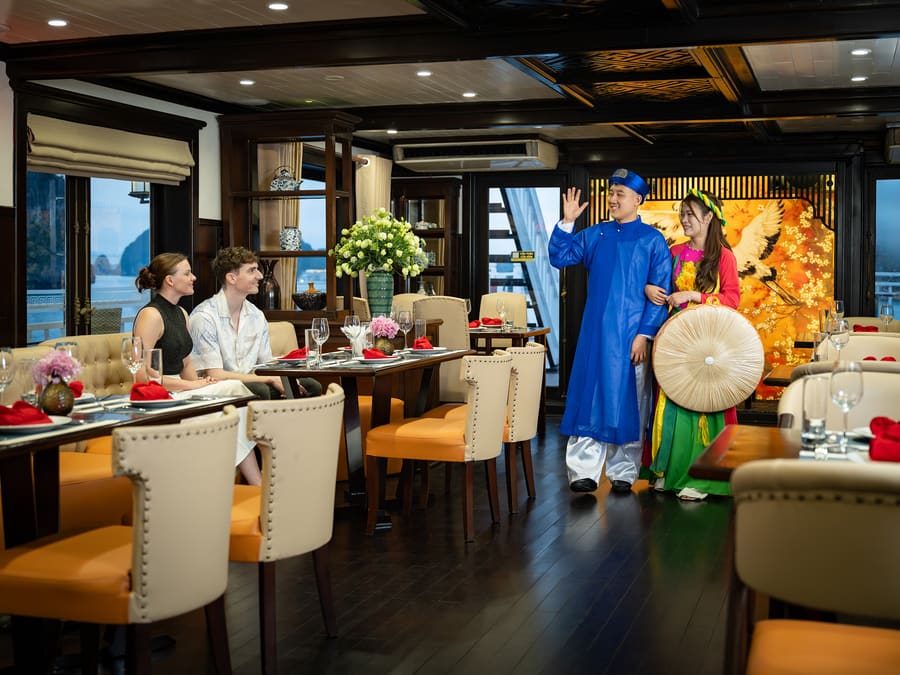
- Why: Frame food with karsts visible through floor-to-ceiling windows
Seasonal Photography Conditions on an Overnight Cruise in Halong Bay
| Season | Light Quality | Visibility | Unique Element | Rating |
|---|---|---|---|---|
| Oct–Nov | Warm, golden | Excellent (15km+) | Autumn haze, amber afternoons | ★★★★★ |
| Mar–Apr | Soft, even | Very good (10km+) | Spring green on karst vegetation | ★★★★★ |
| Dec–Feb | Cool, blue-toned | Variable (fog common) | Moody mist shots, dramatic | ★★★★☆ |
| May–Jun | Strong, warm | Good (8km+) | Vivid green water, strong shadows | ★★★★☆ |
| Jul–Aug | Intense, hot | Variable (haze) | Dramatic clouds, thunderstorm light | ★★★☆☆ |
| Sep | Storm-filtered | Low (5km) | Rare storm breaks create unique light | ★★★☆☆ |
My mother says, “Tháng Mười vịnh mặc áo vàng” — in October the bay wears a golden dress. She’s not a photographer, but she’s describing exactly why October produces the best photography overnight cruise Halong Bay conditions. The humidity drops, the haze clears, and the late-afternoon light turns the limestone into glowing amber.
What I’ve Learned About Cameras After 3,000 Sailings
I don’t own a camera. I have a phone. But I’ve watched professional photographers, National Geographic contributors, and wedding photographers all work on this bay. Here’s what they have in common:
- They arrive early. The best photographers are the ones I see on the sundeck at 5:15 AM, before coffee.
- They move slowly. They don’t shoot everything. They find one composition and wait for the light.
- They look behind them. While everyone photographs the sunset ahead, the professionals turn around. The eastern karsts lit by reflected sunset light are often more photogenic than the direct view.
- They shoot the crew. Candid shots of our chef, our tender driver, our tai chi instructor — those human moments give context that pure landscape shots lack.
- They put the camera down. The best photographers spend 80% of their time looking and 20% shooting.
My father, a fisherman for 30 years before the cruise ships came, never photographed the bay. He says, “Con mắt nhớ lâu hơn cái máy” — the eye remembers longer than the machine. I think he’s both right and wrong. The eye remembers the feeling. The camera remembers the details. An overnight cruise gives you both.
On my Monday mornings off, I sometimes walk along the Bãi Cháy waterfront and look at the bay from land. It looks completely different — distant, flat, postcard-like. From the ship, inside the karsts, at water level, the bay has depth and presence that no shoreline viewpoint captures. That’s the real argument for photography on an overnight cruise in Halong Bay: you’re inside the subject, not looking at it from outside.
See you on the bay. I’ll save you the good seat at the bar — yes, the manager still pours drinks here. — Mike 🌊
Related Guides
- 📖 Cozy Bay Grand Cruise Review 2026: Our Complete Overnight Experience
- 📖 Halong Bay Cruise with Private Balcony: The Premium Overnight Experience
- 📖 Vegetarian & Special Diet Options on Halong Bay Overnight Cruise
- 📖 Cozy Bay Grand Overnight Cruise: What to Expect on Your 2D1N Voyage
📌 Official resource: Hạ Long Bay — Wikipedia