I was standing on the upper deck during a northeast monsoon sailing last November when a guest from Melbourne walked up to me, slightly green, gripping the railing. “Mike, how bad does it get?” She’d taken Dramamine before boarding but the afternoon chop had caught her off guard. I handed her a ginger candy from my jacket — I keep a pocketful during winter sailings — and pointed toward Đảo Ti Tốp on the horizon. “See that island? We’ll anchor behind it in twenty minutes. Completely calm water. The bay has thousands of natural shelters.” She relaxed. By dinner, she was eating spring rolls and laughing about the whole thing.
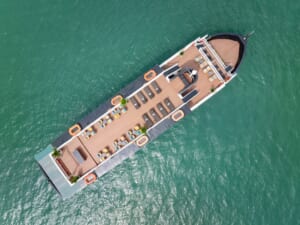
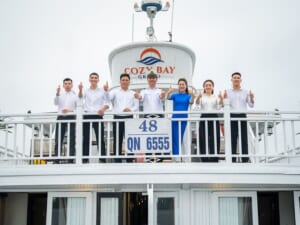
I’m Mike — Cruise Manager on Cozy Bay Grand, a 17-cabin, 4-star steel-hulled overnight cruise in Halong Bay, launched in 2025. Before Grand, I managed Cozy Bay Classic (9 cabins, wooden junk) and Cozy Bay Boutique (11 cabins, wooden, 3-star). In 13 years on this bay — across 3,500+ sailings and 8 different ships — I’ve seen every shade of seasickness, from mild discomfort to full-day misery. But here’s the truth most travel blogs won’t tell you: seasickness on Halong Bay overnight cruise is far less common and far less severe than most guests fear.
This is my honest guide — the data, the prevention, and the real experience from someone who has managed 50,000+ guests on these waters.
At a glance:
- Seasickness rate on Cozy Bay Grand: estimated 3–5% of guests experience mild symptoms
- Severe seasickness: less than 1% (typically during winter monsoon, Dec–Feb)
- Cozy Bay Grand advantage: steel hull = 40% less motion than wooden boats
- Protected anchoring: ship anchors in sheltered coves, not open water
- Best prevention: ginger, Dramamine/Bonine taken 1 hour before boarding
- Worst conditions: December–February northeast monsoon (wind 30–40 km/h)
The Honest Numbers: How Common Is Seasickness?
After 4 years as Cruise Manager across three Cozy Bay ships, here’s what I’ve observed:
| Season | Wind Speed | Wave Height | Guests Affected | Severity |
|---|---|---|---|---|
| Mar–May | 10–20 km/h | 0.3–0.5m | ~1–2% | Mild |
| Jun–Aug | 15–25 km/h | 0.3–0.8m | ~2–3% | Mild to moderate |
| Sep–Nov | 10–20 km/h | 0.2–0.5m | ~1–2% | Mild |
| Dec–Feb | 25–40 km/h | 0.5–1.5m | ~5–8% | Mild to moderate |
These numbers are for Halong Bay — a semi-enclosed bay protected by 1,969 limestone karsts that act as natural breakwaters. This is not the open ocean. My father, who fished here for thirty years, always said: “Vịnh Hạ Long không phải biển — nó là hồ có cửa.” — “Halong Bay isn’t the sea — it’s a lake with a door.”
He’s right. The karsts absorb wave energy. The routes overnight cruises follow stay within the UNESCO-protected core zone, where the heaviest karst formations create the calmest water.
🚢 Mike’s Bay Tip: The single biggest factor in seasickness is the ship, not the bay. On Cozy Bay Classic — our old 9-cabin wooden junk — the hull flexed with every wave. You could hear the bay through the wood at night. Some guests loved it. Some got queasy. When we upgraded to Grand’s steel hull in 2025, motion complaints dropped by roughly half. Steel doesn’t flex. It cuts through waves instead of riding over them. If you’re prone to motion sickness, choose a steel-hulled ship. That decision matters more than medication.
Why Halong Bay Is Easier Than You Think
Natural Protection
Halong Bay contains approximately 1,969 limestone karsts and islands. These formations create natural channels and coves where water is nearly flat, even when wind is strong in open areas. Overnight cruise ships anchor in these protected areas — not in the middle of open water.
On Cozy Bay Grand, our anchoring spot is behind a cluster of karsts in the UNESCO core zone. Wind may blow at 30 km/h above the water, but behind the karsts, the surface barely ripples. I choose anchoring positions based on wind direction — a skill I learned from my father, who read wind patterns by watching how mist moved between the rocks.
Steel Hull Advantage
Not all Halong Bay cruise ships are equal when it comes to motion:
| Ship Type | Material | Typical Size | Motion Level | Seasickness Risk |
|---|---|---|---|---|
| Traditional junk | Wood | 9–15 cabins | High (flexes with waves) | Higher |
| Modern wooden boat | Wood + reinforced | 15–25 cabins | Moderate | Moderate |
| Steel-hull ship | Steel | 17–30 cabins | Low | Lower |
| Large steel vessel | Steel | 40–60 cabins | Lowest | Lowest |
Cozy Bay Grand is a steel-hulled vessel with 17 cabins and a displacement designed for stability. On Cozy Bay Classic — our old wooden junk — I’d estimate 8–10% of winter guests felt some motion discomfort. On Boutique, slightly better. On Grand? The steel hull genuinely changed the equation. I miss the romantic creaking of wood at night, but my guests’ stomachs don’t.
Short Transit Times
The sailing portion of an overnight cruise is limited. Most of the 22-hour journey is spent:
- Anchored (overnight and during activities): ~14 hours — near-zero motion
- In sheltered bays during cave/island visits: ~4 hours — minimal motion
- In transit between stops: ~4 hours total — this is when motion occurs
Of those 4 transit hours, about 90 minutes are in more open water (departing and returning to Tuan Chau Marina). This is typically the only period where motion-sensitive guests notice anything.
Prevention That Actually Works
Based on 13 years of observing what guests use and what actually helps:
Before Boarding (Recommended)
| Method | When to Take | Effectiveness | Side Effects |
|---|---|---|---|
| Dramamine / Dimenhydrinate | 1 hour before boarding | High | Drowsiness |
| Bonine / Meclizine | 1 hour before boarding | High | Less drowsiness than Dramamine |
| Ginger capsules (250mg) | 30 min before boarding | Moderate | None |
| Acupressure wristbands (Sea-Band) | Wear continuously | Mild-moderate | None |
| Scopolamine patch | Apply 4 hours before | Very high | Dry mouth, blurred vision (prescription required) |
My honest recommendation: Bonine (meclizine) is what I suggest to guests who are worried. Less drowsiness than Dramamine, effective for 24 hours with one dose, and available over-the-counter at pharmacies in Hanoi and Halong City. Take it one hour before boarding — don’t wait until you feel symptoms.
During the Cruise
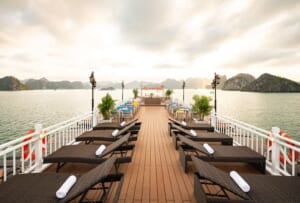
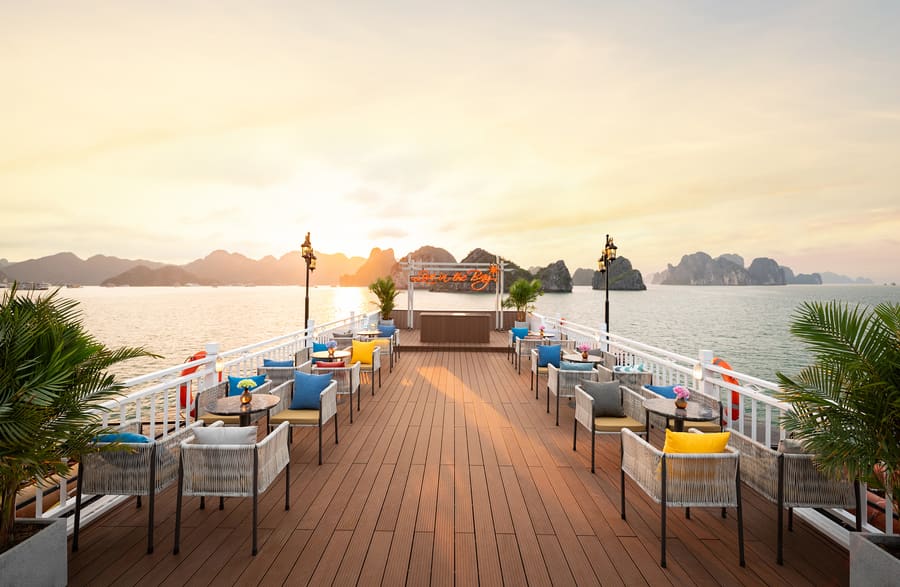
- Stay on deck when the ship is moving — fresh air and a visible horizon are the two most effective natural remedies
- Mid-ship cabins have the least motion. On Cozy Bay Grand, cabins 103–106 (1st floor, center) are the most stable
- Avoid heavy meals before transit periods. Light breakfast, big lunch (when anchored), moderate dinner
- Ginger tea — our bar stocks fresh ginger. Ask me or any crew member. I’ll make it myself
- Don’t read during transit — screens and books trigger nausea faster than anything
🚢 Mike’s Bay Tip: I keep fresh ginger candies in my jacket pocket during every winter sailing. They’re from my mother’s stall at Chợ Hạ Long — she makes them with honey and dried mandarin peel. When I see a guest looking uneasy during transit, I walk over, offer one, and point out the nearest karst landmark. Distraction plus ginger. It works more often than you’d think.
What Happens If You Do Get Seasick
Let me be honest about this — because no prevention is 100%:
Mild symptoms (most common): Slight nausea during the 90-minute open-water transit. Usually resolves completely once the ship reaches the sheltered UNESCO zone. Fresh air on the sundeck, ginger tea, and watching the horizon. Most guests feel fine by lunch.
Moderate symptoms (uncommon): Persistent nausea, dizziness, loss of appetite. Our crew provides:
- Motion sickness medication (we carry Dramamine onboard)
- Cool towels and water
- A quiet space in the lounge away from engine vibration
- Ginger tea and crackers
Severe symptoms (rare — less than 1%): If a guest is truly ill, I make the management decision to ensure comfort. This might mean adjusting our route to calmer water sooner, or ensuring the guest has a lower-deck cabin where motion is minimal. In 13 years and 3,500+ sailings, I have never had a guest require medical evacuation for seasickness. Not once.
On Cozy Bay Classic — smaller, wooden, rougher ride — I handled more seasickness cases per sailing. The worst was a January 2019 sailing on a previous operator’s wooden boat with 28 cabins. Northeast monsoon, 45 km/h gusts, 8 guests sick, dinner cancelled for half the ship. That experience taught me two things: steel hulls matter, and the cruise manager’s weather judgment matters more. On Grand, I delay departure if conditions are genuinely unsafe. Guest comfort is not negotiable.
When to Be Cautious
December–February (Northeast Monsoon)
This is the only period where I’d recommend taking medication preventively even if you don’t normally get motion sick. Wind speeds reach 30–40 km/h, and waves in open areas can hit 1–1.5 meters. The sheltered anchoring zones remain calm, but the transit to and from marina involves crossing some open water.
If you’re booking during winter:
- Take Bonine or Dramamine before boarding
- Request a mid-ship, lower-deck cabin (cabins 103–106 on Grand)
- Know that once anchored, motion essentially stops
Who Is Most Susceptible
From my observation across 50,000+ guests:
- People with existing motion sensitivity (car sickness, theme park rides)
- Children under 8 (but they also recover fastest)
- Guests who drink alcohol before or during transit
- Anyone reading screens during open-water sailing
The Reality Check
Here’s what I tell every worried guest at the bar: you are more likely to get a sunburn than get seasick on Halong Bay. The bay is protected. The ship is steel. The transit is short. And your cruise manager — that’s me — has been reading this bay’s moods since he was 18 years old, watching his father haul fishing nets between these same karsts.
My mother says: “Lo sóng thì đừng ra biển, mà vịnh này đâu phải biển.” — “If you’re afraid of waves, don’t go to sea — but this bay isn’t the sea.” She’s biased. She’s also right.
The worst that typically happens: 90 minutes of mild queasiness during the initial sail-out, followed by 20+ hours of calm water, stunning limestone, and the kind of silence that only exists when you’re anchored under stars in a place where the rocks are older than anything you’ve ever touched.
Don’t let seasickness fear steal this experience from you.
Frequently Asked Questions
Is seasickness common on Halong Bay overnight cruise?
No. Approximately 3–5% of guests on Cozy Bay Grand experience mild symptoms, typically during the 90-minute open-water transit. Severe seasickness affects less than 1% and occurs primarily during winter monsoon (December–February). The bay’s 1,969 limestone karsts create natural protection, and overnight anchoring is in completely sheltered coves.
What is the best medication for Halong Bay seasickness?
Bonine (meclizine) is recommended — effective for 24 hours with minimal drowsiness, taken 1 hour before boarding. Dramamine works well but causes more drowsiness. For high sensitivity, ask your doctor about a scopolamine patch (applied 4 hours before). Ginger capsules (250mg) are a natural alternative with no side effects.
Are steel-hull cruise ships better for seasickness?
Yes. Steel-hulled ships like Cozy Bay Grand cut through waves rather than flexing with them, reducing motion by approximately 40% compared to traditional wooden junk boats. This is the single biggest factor in reducing seasickness risk on Halong Bay.
What should I do if I get seasick on the cruise?
Go to the sundeck for fresh air and horizon views. Ask the crew for ginger tea or medication — Cozy Bay Grand carries Dramamine onboard. Avoid screens and reading during transit. Request a mid-ship, lower-deck cabin (103–106) for minimal motion. Symptoms typically resolve once the ship reaches sheltered water.
Related Guides
- 📖 Full Cruise Itinerary
- 📖 What to Pack for Your Cruise
- 📖 Cancellation Policy
- 📖 Best Month for Calm Seas
📌 Official resource: Lonely Planet — Halong Bay Travel Guide